anyvisa.app
Anyvisa
UK's leading online visa platform
300%
increase in application capacity
75%
reduction in support tickets
4.8/5
customer satisfaction score
Most visa agencies start on the free WhatsApp Business app and hit its limits once several consultants share one number. Here is how the WhatsApp Business Platform works, how Meta charges for it today, and what an agency actually needs.

The WhatsApp Business API — officially the WhatsApp Business Platform — lets software send and receive WhatsApp messages on a business number, so a whole team and a CRM can work from one number. A visa agency needs it once several staff share client chats or once reminders and status updates should be sent automatically.
Meta describes the platform as the way to communicate with customers at scale through APIs, while the WhatsApp Business app is "built with the small business owner in mind". For a two-person consultancy, the app is often enough. For an agency where a client's documents, payment and appointment are handled by different people, a single phone becomes the bottleneck: messages are stuck on one device, nobody else can see the history, and nothing is linked to the case.
The typical signs that it is time to move to the platform:
For the day-to-day automation ideas, see WhatsApp automation for visa agencies. This article covers the platform itself: what it costs, how messages are classified, and how to connect.
Both products let a business have a WhatsApp presence, but they are built for different operating models.
| WhatsApp Business app | WhatsApp Business Platform (API) | |
|---|---|---|
| Built for | Small business owners working from a phone | Businesses messaging at scale through software |
| How you use it | Mobile app, plus linked devices | Your CRM, inbox tool or a partner's software |
| Cost of messages | Free to download and use, with some paid features | Charged per delivered template message; service replies free |
| Starting a conversation | Message anyone who has your number saved | Only with a pre-approved template outside the service window |
| Automation | Greeting, away messages and quick replies | Triggered by events in your own systems |
| Team use | Limited to the devices linked to the app | Many agents and systems on one number |
| Set-up | Download from the app store | Meta business portfolio, a developer app or a partner |
Meta now also supports using both on the same number. Its coexistence documentation explains that a business can onboard its existing WhatsApp Business app number to the Cloud API through a partner and keep replying one-to-one in the app, with history kept in sync. Messages sent from the app stay free; messages sent through the Cloud API follow Cloud API pricing. Some features, such as group chats and disappearing messages, are not available on the API side, and throughput on shared numbers is fixed at a lower level than a dedicated API number.
Coexistence is useful for an agency that has years of client chats on the app and does not want to change numbers. It is less useful if the goal is to take the agency's number off a single person's phone altogether.
Book a quick demo and see how it works for your visa types.
At the time of writing (September 2026), Meta's pricing documentation states that, effective 1 July 2025, it charges on a per-message basis, and "you are only charged when a template message is delivered". The older conversation-based model, where a 24-hour conversation was the billing unit, is marked as deprecated.
The rules that decide whether a message costs anything:
| Message type | When it is charged |
|---|---|
| Non-template messages (text, images, documents) | Never; they can only be sent inside an open customer service window |
| Utility templates | Charged outside a customer service window; free inside one |
| Marketing templates | Charged whenever delivered |
| Authentication templates | Charged whenever delivered, with volume tiers available |
| Any message in a free entry point window | Free for 72 hours after a client starts a chat from a Click-to-WhatsApp ad or Page call-to-action, if you reply within 24 hours |
The customer service window is a 24-hour window that opens when a client messages you. Inside it you can reply with free-form messages at no charge. Outside it, you can only reach the client with an approved template.
Three more points from Meta's documentation matter for budgeting:
This article deliberately does not list per-country prices. They change, and a stale figure copied into a proposal is worse than none. Check the current rate card linked from Meta's pricing page before you estimate costs, and if you use a partner, ask whether they add their own fee on top of Meta's charges.
For estimating, count your expected templates per case — for example one confirmation, a few document reminders, one appointment reminder and one outcome notice — multiply by monthly case volume, and split by category and client country. Then compare that with the cost of staff time spent sending the same messages by hand; the real cost of manual visa processing walks through that calculation.
Meta's template categorisation guide defines three categories. Utility templates "follow up on user actions or requests"; marketing templates cover goals "from generating awareness to driving sales and retargeting customers"; authentication templates verify a user's identity with one-time passcodes. Meta checks the category you choose against the content, and a template that mixes a utility message with promotional content is treated as marketing.
How typical agency messages map to categories:
The practical lesson is to keep operational templates clean. A document reminder that ends with "Also ask us about travel insurance" becomes marketing, costs more, and is subject to the rules for marketing messages. Send promotions as separate, clearly marketing templates, only to clients who agreed to receive them.
Meta can re-categorise approved utility templates it considers marketing, with advance notice, and allows businesses to request a review within a limited period. Assign one person to own your template library, review notices from Meta and keep a record of what each template is for. Template wording also affects how clients read your updates; the tone guidance in client communication best practices applies here too.
Meta's opt-in requirements say businesses must clearly state that a person is opting in to receive communication, must clearly name the business the person is opting in to, and must comply with applicable law. Opt-in is needed before you send business-initiated messages.
For a visa agency, the cleanest place to collect it is at intake:
Remember what travels over WhatsApp in a visa business: passport pages, bank statements, sometimes medical documents. Consent to receive messages is not the same as a lawful basis for processing that data. Your privacy notice and data processing agreements must cover WhatsApp and any partner who handles the messages; see data privacy compliance for visa agencies and where visa applicant data is stored.
A good rule is to use WhatsApp to tell clients that something has happened and to send them to a secure upload link or portal for the documents themselves, as described in automating document collection.
Meta's current API is the Cloud API, hosted by Meta. The self-hosted On-Premises API has been sunset: Meta's sunset notice says its final supported client version expired on 23 October 2025 and it can no longer be used to message WhatsApp users. Any vendor still talking about installing an on-premises WhatsApp server is out of date.
There are three realistic ways for an agency to get connected:
| Route | Who does the work | How billing works | Best for |
|---|---|---|---|
| Direct Cloud API | Your own developer builds and maintains the integration | Meta bills your business portfolio | Agencies with in-house engineering |
| Solution Partner or Tech Provider | The partner onboards your number and provides software | Solution Partners can invoice you; Tech Provider clients add their own payment method | Agencies wanting a shared inbox tool |
| Platform with WhatsApp built in | The platform connects WhatsApp to your cases | Depends on the platform's plan and Meta's charges | Agencies wanting messages linked to case records |
Meta's partner documentation describes Solution Partners as Meta Business Partners providing messaging services, billing, integration and customer support to client businesses, and notes that a business building only for itself can use the Cloud API directly.
Whichever route you take, the business should own the assets. Make sure the WhatsApp Business Account and phone number sit in your agency's own Meta business portfolio, with at least two administrators, so you can change partner later without losing the number. The same logic applies to any agency system; choosing the right CRM lists questions to ask vendors.
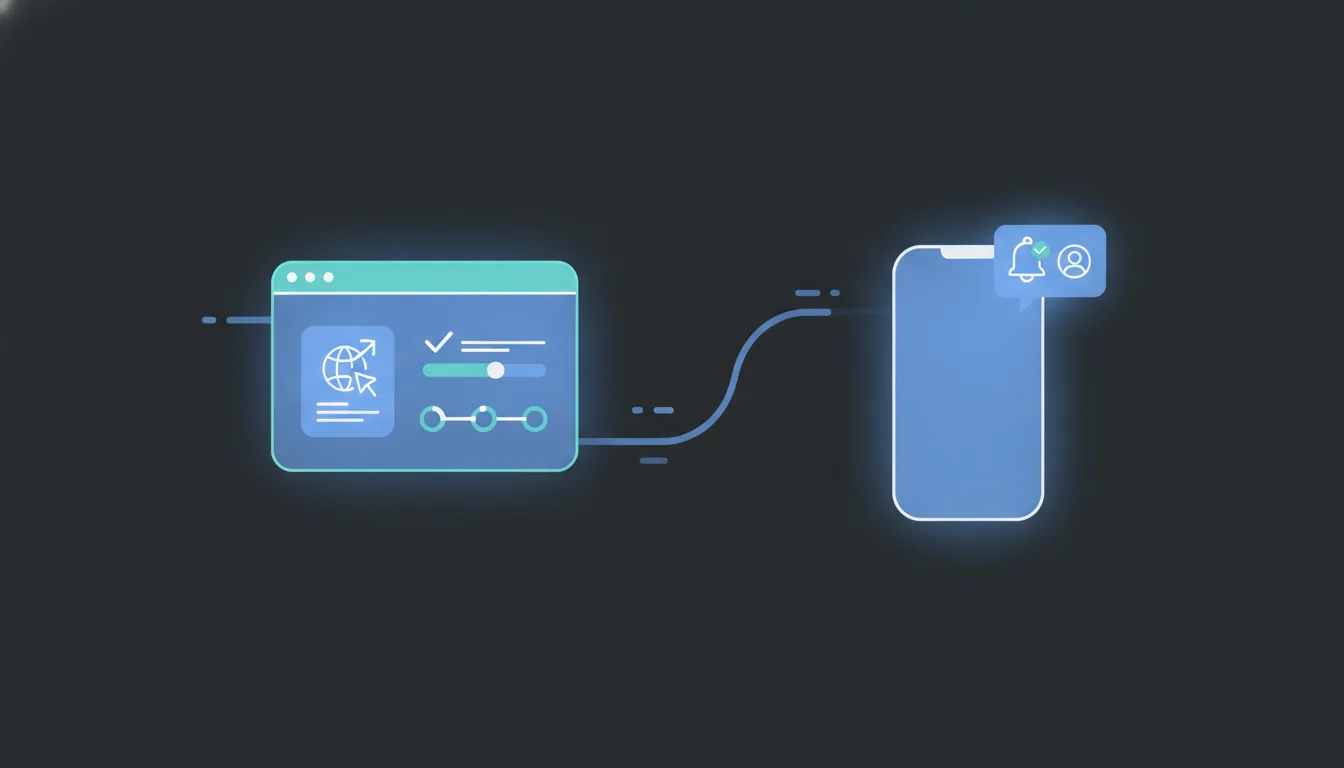
The value for a visa agency is rarely the WhatsApp connection on its own. It is having messages triggered by case events and stored in the same client timeline as email and SMS. That is what a multi-channel communication module does, alongside the other integrations; the answer on sending WhatsApp updates summarises the set-up.
Start small and operational. A focused first release earns trust with clients and keeps costs predictable.
On VisaCRM, Anyvisa tripled application capacity without adding headcount and cut support tickets by 75%, as described in the Anyvisa case study. The principle is the same whether the channel is WhatsApp or email: answer the predictable questions before clients have to ask. Automating visa status updates covers which updates to send and when.

Tell us what you need and we'll come back with a plan. Nothing to pay until it's delivered.
Get started →The same handful of mistakes come up again and again:
Marketing messages may also fall under national rules on commercial electronic communications in your market, so check them with a local adviser before your first campaign.
WhatsApp works best as one channel inside a documented client process, not as the process itself. If your agency is growing quickly, scaling a visa agency without hiring explains where messaging automation fits among the other levers.
Not entirely. Since 1 July 2025 Meta charges per delivered template message, with rates that depend on the template category, the recipient's country and monthly volume. Non-template replies sent inside the 24-hour customer service window are free, and utility templates sent inside an open window are also free. Partners and software vendors may add their own fees.
It depends on the template category, the recipient's country or region and your monthly volume tier, and Meta changes rates over time. Meta publishes current rate cards on the WhatsApp Business website, linked from its pricing documentation for developers. Always check the current card before estimating, rather than relying on a figure quoted in an article or an old proposal.
A reminder that follows up on a client's open application, such as asking for a missing bank statement, fits Meta's utility category because it relates to the client's own request. If the same template also promotes another service or an offer, Meta treats it as marketing. Keep operational reminders free of promotional content to stay in the utility category.
Yes, through what Meta calls onboarding WhatsApp Business app users, often referred to as coexistence. A partner onboards your existing app number to the Cloud API, you keep chatting one-to-one in the app, and history stays in sync. App messages remain free, API messages follow Cloud API pricing, and some app features are unavailable on the API side.
Yes. Meta requires businesses to obtain opt-in before sending business-initiated messages, to state clearly that the person is opting in, to name the business, and to comply with applicable law. Record the consent and its wording on the client record, keep marketing consent separate, and make it easy for clients to stop receiving messages.
Rules, fees and processes change. We checked this article against the official sources below on 16 September 2026 — confirm anything time-sensitive with the source before you rely on it.
The patterns in this article are already deployed across these platforms. Different brands, different visa types — one engine underneath.
Practical guides that go deeper on running a modern visa business.