
visarunway.app
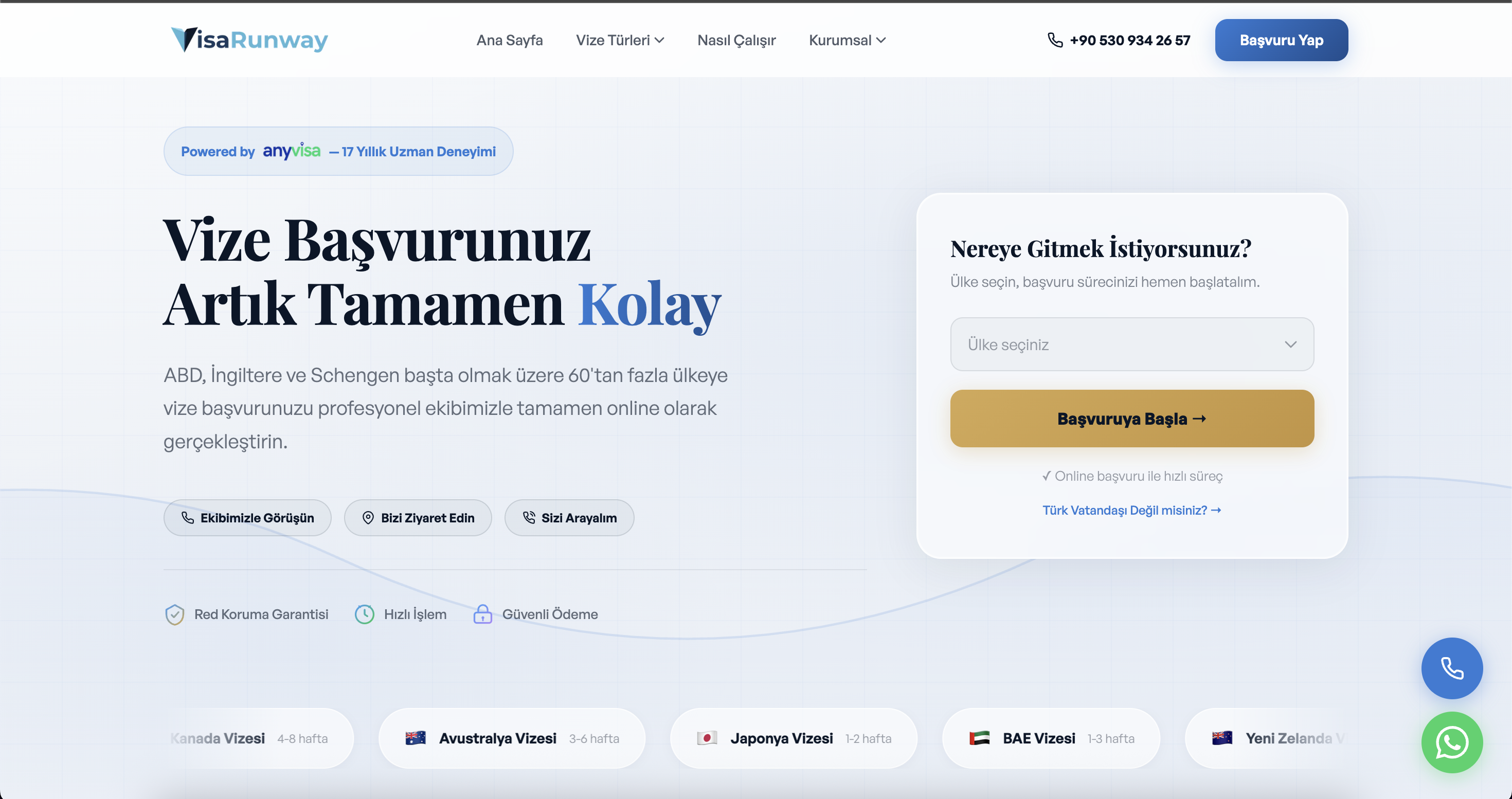
Visarunway
Fast-growing visa agency scaling with technology
0→2K
monthly applications in year one
60%
reduction in support inquiries
48h
from kickoff to first live application
Apostilles, consular legalisation, notarisation and sworn translations are four different things, and visa files fail when they get mixed up. Here is what each one does and how an agency tracks them per applicant.

An apostille is a certificate, issued under the 1961 Hague Apostille Convention by an authority in the country where a public document was issued, that certifies the signature, the signer's capacity and any seal on that document. It replaces the longer legalisation chain between Convention countries. It does not certify that the document's content is true.
That last point matters most to a visa agency. The Convention's full name is the Convention of 5 October 1961 Abolishing the Requirement of Legalisation for Foreign Public Documents. Article 5 says a correctly completed certificate confirms the authenticity of the signature, the capacity in which the person signing acted and, where appropriate, the identity of the seal or stamp. The HCCH's own outline of the Convention adds that the apostille "does not relate to the content of the underlying document itself". An apostilled certificate with a wrong date of birth is still a certificate with a wrong date of birth.
A few more facts shape how agencies work with apostilles:
For an agency, the practical definition is simple: an apostille is a step that makes a foreign public document usable abroad. It is not a quality check, and it does not replace your own review of the file.
A document needs an apostille when the authority receiving it asks for one and when both countries involved are parties to the Convention. Article 1 says the Convention applies to public documents executed in one Contracting State that have to be produced in another. If either country is outside the Convention, the apostille route does not apply.
There is one more wrinkle. Under Article 12, when a country joins, the Convention only takes effect between it and existing parties that did not object within six months. The HCCH status table marks accessions that drew objections, so "both countries are on the list" is necessary but not always enough. Check the status table entry for both countries, not just the membership count.
Before a consultant tells a client to get anything apostilled, the file should answer these questions:
The private-document point catches people out. According to the HCCH outline, a diploma from a private institution can carry an official certificate from a notary or another competent person, and that certificate can then be apostilled. In that case the apostille relates to the notary's certificate, not to the diploma. This is a common pattern for student visa files and for work applications that need qualification evidence.
The Convention also excludes two categories: documents executed by diplomatic or consular agents, and administrative documents dealing directly with commercial or customs operations. The HCCH outline notes that the second exclusion is read narrowly.
Family cases generate the most apostille work because they rely on civil status documents: birth and marriage certificates, divorce and custody rulings, adoption orders. If your agency handles family visa applications, build the apostille question into intake rather than discovering it at the checklist stage.
Book a quick demo and see how it works for your visa types.
These four steps are often lumped together as "getting the documents legalised". They are different acts by different people, and a file can need one, several or all of them. The table sets out the differences at the level an agency needs to brief a client.
| Step | Who carries it out | What it confirms | When a visa file typically needs it |
|---|---|---|---|
| Notarisation or certified copy | A notary or other official allowed to certify, depending on the country | That a copy matches an original, or that a signature was made before the notary | When the authority accepts copies, or when a private document must become a public one before an apostille |
| Apostille | The competent authority designated by the country that issued the document | The signature, the signer's capacity and the seal on a public document | When both countries are Convention parties and the receiving authority asks for it |
| Consular legalisation | A chain of authorities, often ending with the destination country's embassy or consulate | The same type of authenticity, certified step by step | When the Convention does not apply between the two countries |
| Certified or sworn translation | A translator recognised under the rules of the country that requires it | That the translation is faithful to the source text | When the document is not in a language the receiving authority accepts |
| e-Apostille | A competent authority that issues apostilles electronically | The same as a paper apostille | When the issuing country offers it and the receiving authority accepts electronic documents |
Two observations make this table usable.
First, consular legalisation is the fallback, not the default. The HCCH outline describes the Convention as replacing "the cumbersome and often costly formalities of a full legalisation process (chain certification)" with a single certificate. If the destination is outside the Convention, the embassy or consulate of that country sets the steps. Do not guess them from a previous client's file.
Second, translation rules belong to the receiving country. What counts as an acceptable translation differs from one destination to the next. Keep a per-destination note in your country requirements, the same way you keep Schengen document lists, and link it to the checklist rather than relying on memory.
There is no single correct order. The right sequence is whatever the receiving authority will accept, and getting it wrong is expensive because an apostille cannot be moved from one document to another. In practice, agencies meet two common patterns:
Some authorities want both the original and the translation apostilled. Ask before the client spends money. A good working sequence for the consultant is:
Step 1 is the one to protect. A consultant who skips it and relies on how the last client's file was handled will eventually send a client to the wrong office in the wrong order. Written requirements belong in the file, not in a chat thread, which is where a structured document management system earns its keep.

It varies by country, by service level and by whether the document first has to be ordered, certified or translated. Treat the timeline as a chain: the total is the sum of every step, plus postage or courier time when the document is issued in another country.
Official services publish their own timings, and they change, so check the current figure on the competent authority's page. As one example, at the time of writing (September 2026) the UK's Legalisation Office lists these service levels on GOV.UK:
Consular legalisation can involve several offices in sequence, and each one adds its own time. Rather than quoting numbers you cannot guarantee, plan with the drivers in this table.
| Stage | What drives the time | How the agency plans for it |
|---|---|---|
| Obtaining the document | Whether the client holds a recent original or has to order a new one from a registry, court or university | Ask for the document at intake, not after the checklist is final |
| Certification | Notary availability and whether the document is private | Book notary appointments alongside the order for the document |
| Apostille or legalisation | The authority's published service level, and postage when it is abroad | Use the authority's current published timing and add courier time |
| Translation | Length of documents and whether sworn or certified translation is required | Brief the translator as soon as the order of steps is confirmed |
| Verification and scanning | Internal review workload | Build a fixed review slot into the case plan |
The practical rule: work backwards from the latest acceptable submission date, and treat any document issued abroad as the item most likely to slip. If a client's travel date is close, say so at the start. The urgent applications guide covers how to accept or decline those cases honestly.
Because an apostille only certifies origin, the useful check is whether the apostille itself is genuine. The Convention gives you a tool for that. The HCCH outline explains that every competent authority must keep a register of the apostilles it issues, and that these registers can be accessed by any interested person as "an essential tool to combat fraud and verify the origin of an Apostille in case of doubt".
Under the electronic Apostille Programme (e-APP), launched by HCCH in 2006, some authorities run online e-Registers. According to the HCCH outline, a person must provide at least the date and the number of the apostille they have been given; the register confirms whether that apostille was really issued by the authority named on it. It does not allow browsing of other records.
A simple verification routine for a pre-submission review:
The HCCH states that an e-Apostille cannot be refused simply because it is electronic and must be accepted by all Contracting Parties. It still makes sense to confirm the receiving office's practical process for electronic documents.
Verification belongs in your second-pair-of-eyes review, next to the other checks in quality control for visa applications. If something looks wrong, follow the escalation route in your fraud controls rather than fixing it quietly.
The most common failure is tracking legalisation as one tick on the whole application: "documents legalised: yes". A family file can hold a dozen documents from three countries, each at a different step. Track it per document instead.
Useful fields on each document record:
With those fields in place, three views become possible: a list of documents waiting on an external authority, a list of documents due this week, and a per-client summary the client can see without calling you. Clients asking "is my apostille back yet?" is exactly the kind of repetitive enquiry that disappears once status is visible. Visarunway grew from zero to 2,000 applications a month and cut repetitive enquiries by roughly 60% after moving communication and status onto one system; the Visarunway case study describes how.
If you are still running this in a spreadsheet, the guide to moving off spreadsheets is a sensible starting point. VisaCRM is a done-for-you platform that builds per-document checklists, statuses and client updates for visa agencies on their own brand. It does not decide which legalisation route applies to a document; that decision stays with the consultant and the receiving authority. The broader collection process is covered in automating document collection.
Tell us what you need and we'll come back with a plan. Nothing to pay until it's delivered.
Get started →Most client frustration comes from not knowing why a step is needed or how long it will take. A short, consistent briefing avoids most of it. Cover these points when the document list is sent:
Keep the scope honest. Explaining a published procedure is operational support. Advising on whether a document satisfies an immigration rule may be regulated advice in some countries; see who can give immigration advice for a fee before your team drifts into it.
Finally, write the briefing once and reuse it. A template per destination, sent automatically when the checklist is issued, is more reliable than each consultant explaining it from memory. The client communication guide has more on setting expectations that hold.
An apostille is a certificate issued under the 1961 Hague Apostille Convention by a competent authority of the country where a public document was issued. It certifies the authenticity of the signature, the capacity of the person who signed and, where relevant, the seal or stamp. It does not certify that the content of the document is correct.
No. The Apostille Convention only applies between countries that are both parties to it. HCCH listed 130 Contracting Parties at the time of writing (September 2026). If the destination country is not a party, the apostille is not the right route, and the agency should confirm the legalisation steps with that country's embassy or consulate.
An apostille is a single certificate issued by the country where the document came from, and it is accepted by other Convention parties. Consular legalisation is the older chain of certifications, often ending with the destination country's embassy or consulate, and it is used where the Convention does not apply. The destination authority tells you which route it accepts.
It depends on the country. An apostille can only be placed on a public document, so a translation usually needs to be certified first, for example by a notary, before it can be apostilled. Some receiving authorities want the apostille on the original and a translation of both; others want the translation itself apostilled. Confirm the required order before starting.
Yes. HCCH states that an e-Apostille cannot be refused simply because it is issued in electronic form and must be accepted by all Contracting Parties. In practice, the receiving office still decides whether it wants originals, certified copies, paper or electronic documents, so the agency should check the specific request before the client orders anything.
Rules, fees and processes change. We checked this article against the official sources below on 16 September 2026 — confirm anything time-sensitive with the source before you rely on it.
The patterns in this article are already deployed across these platforms. Different brands, different visa types — one engine underneath.
Practical guides that go deeper on running a modern visa business.