
visarunway.app
Visarunway
Fast-growing visa agency scaling with technology
0→2K
monthly applications in year one
60%
reduction in support inquiries
48h
from kickoff to first live application
A new travel agency can build visa services in from day one. This guide covers the licences and accreditations that actually apply, the host-versus-independent choice, and a business plan that treats visas as a real revenue line.

To start a travel agency with visa services you need a registered business, whatever travel licence or registration applies where you are based and where you sell, a decision on host agency versus independent accreditation, a written business plan, and a clear scope for visa work that stays on the assistance side of immigration advice.
That answer hides a lot of variation. A search for travel agency licence suggests there is one document to obtain. In practice there is a patchwork: some jurisdictions require a government licence before you trade, some require a registration and a bond, some only care if you sell certain products such as flight packages, and some have no travel-specific rule at all. On top of the legal layer sits a commercial one — airline accreditation, supplier contracts and payment processing — which decides what you can sell and on what terms.
Visa services add a third layer. A traveller booking with you will often need a visa, an eVisa or an electronic travel authorisation, and a new agency that plans for this from the beginning gets a revenue line most competitors treat as an afterthought. If you already run an established agency and only want to bolt visas on, our guide to adding visa services to an existing travel agency covers the referral, partner and white-label models in depth. This article is for founders starting from zero.
Nothing here is legal advice. Rules differ by country and change, so treat each example below as a pointer to the official source, and confirm the current position with the regulator or a local adviser before you commit money.
The requirement depends on two things: where your business is established, and where your customers are. Selling online does not take you outside the rules of the places you sell into. The examples below are among the most commonly searched, and each was checked against the official source at the time of writing (September 2026).
| Licence or accreditation | What it covers | Where it applies |
|---|---|---|
| Seller of travel registration (California) | Registration with the Attorney General before doing business, with a per-location filing fee and annual validity | Sellers of travel doing business in California |
| Seller of travel registration (Florida) | Annual registration with the state agriculture and consumer services department, backed by a surety bond | Sellers with a Florida location or selling travel in Florida |
| ATOL | Licence from the UK Civil Aviation Authority for selling flight-inclusive packages and certain flight-only sales | Businesses selling to UK consumers, including those based outside the UK |
| Seyahat acentası işletme belgesi and TÜRSAB membership | Ministry of Culture and Tourism operating licence, issued to companies, with mandatory membership of the travel agencies association | Any business carrying out travel agency activity in Turkey |
| IATA accreditation | Commercial accreditation to sell airline tickets and settle through IATA's Billing and Settlement Plan | Agencies outside the US that want to issue tickets themselves |
| IATAN accreditation | The programme IATA directs US-based agencies to for accreditation | Travel agencies located in the United States |
California requires a seller of travel to apply for registration with the Attorney General not less than 10 days before doing business in the state, and registration runs for one year, according to Business and Professions Code section 17550.20. Florida requires annual registration and proof of assurance in the form of a surety bond; check the current fee and bond amounts on the FDACS page rather than relying on a figure copied into a blog. California and Florida are only two examples, so check whether each state you sell into has its own rule.
In the UK, the CAA states that the ATOL Regulations apply equally to businesses established outside the UK if they advertise and sell to UK consumers. An agency that only sells visa assistance and hotels is in a different position from one that packages flights, which is why product design and licensing need to be decided together.
In Turkey, Law No. 1618 says that carrying out travel agency activity requires an operating licence from the Ministry, that the licence is issued to legal entities, and that membership of TÜRSAB is mandatory. The application runs through both the Ministry and TÜRSAB, including an office inspection.
Book a quick demo and see how it works for your visa types.
Most founders face this choice before any other, because it decides how quickly they can sell. A host agency is an established, accredited agency that lets independent agents sell under its supplier contracts and accreditation in exchange for a share of commission. An independent agency holds its own registrations, accreditations and supplier relationships.
Some state rules recognise working under another registered seller. California's seller-of-travel statute, for example, contains an exemption for certain individuals and limited liability companies that have a written contract to act on behalf of a registered seller of travel; the conditions are specific, so read section 17550.20 before relying on it. Florida's page notes an exemption tied to a history of Airlines Reporting Corporation contracts under the same ownership, which a brand-new agency will not have.
| Factor | Host agency | Independent agency |
|---|---|---|
| Time to first sale | Short, because you use the host's contracts | Longer, because you set up your own |
| Upfront cost | Usually lower | Higher: registrations, bonds, guarantees |
| Commission | Shared with the host | Kept in full |
| Brand and data | Often partly controlled by the host | Fully yours |
| Airline ticketing | Through the host's accreditation | Through your own IATA or IATAN accreditation |
| Visa services | Depends on what the host allows | Your decision |
For airline tickets, IATA describes three accreditation models. GoLite has simplified requirements and no minimum financial guarantee to issue air tickets; GoStandard gives access to all IATA standard payment solutions; GoGlobal is aimed at multi-country agencies with one set of financial criteria and a single guarantee. IATA's accreditation page sends US-based agencies to the IATAN programme instead, and requirements vary by country, so use IATA's country checklist for your market.
A reasonable sequence for many founders is to start hosted, prove demand, and apply for independent accreditation once volume justifies the cost. Visa services are a useful test during that period, because they do not depend on airline accreditation at all.
A business plan for a small agency does not need to be long. It needs to answer the questions a bank, a bonding company, a host agency or a future partner will ask, and it needs honest numbers. This skeleton covers the essentials:
Cash flow is where new agencies get caught out. Travel money often passes through your account on its way to someone else, and visa work adds government and centre fees that are generally non-refundable once an application is lodged. Read cash flow management for visa agencies before you set payment terms, and set up payment processing that separates the fee types from the start.
For the marketing section, pick channels you can measure and note what each one costs; our guide to visa agency marketing channels lists the options and their trade-offs.
Visa services work best as a planned product line with its own price, process and limits. Customers booking a trip regularly need to know whether they need a visa, and a new agency that can answer confidently, then handle the paperwork, has a reason to be chosen over an online booking site.
Start with the products your customers will actually need. For most leisure-focused agencies that means short-stay tourist visas, the Schengen area for travel to Europe, and electronic travel authorisations. These have published requirements and procedural work, which suits a team that is still learning.
Price them properly. The customer should always see two separate amounts: the government or centre fee, which you pass through, and your service fee, which pays for your work. The difference between a government fee and a service fee is the most common source of confusion and complaints, and it matters most when an application is refused and the customer asks for money back.
Decide early which of the three delivery models fits:
A new agency often starts with referral and moves to its own desk once it can see steady demand. What changes the economics is volume and repeat business: a customer who trusts you with a visa is likely to book the trip through you too, and to come back next year.
Keep the scope honest. Work, study, family and settlement cases involve more judgement and higher stakes. Refer those to a qualified partner until you have the expertise, and write that rule down so every staff member applies it the same way.

It can, depending on what you do and where. The line that matters is between administrative assistance and immigration advice. Helping a customer complete a form, checking their documents against the published list, booking an appointment and submitting on their behalf is generally assistance. Telling someone which immigration route to pursue, assessing their eligibility, or advising how to present a difficult case is advice, and several countries restrict advice given for a fee to authorised people.
The UK, Australia, Canada and the United States each regulate immigration advice differently. We compare the four regimes in who can give immigration advice for a fee, and the glossary explains bodies such as the Immigration Advice Authority and OMARA. The practical point for a new agency is that the destination country's rules can apply even if your office is somewhere else.
Build these rules into the service from day one:
Data protection is the other obligation that arrives with visa work. Passport scans, bank statements and family details are sensitive, and privacy laws such as the GDPR in Europe or KVKK in Turkey apply to how you collect, store and delete them. Our guide to data privacy compliance for visa agencies covers the basics.
A new agency can run its first few bookings from email and a spreadsheet. The problems start when bookings and visa cases overlap: a customer's flight date changes and nobody updates the visa appointment, a passport scan sits in someone's personal inbox, or a government fee is taken as part of one combined payment and cannot be separated at refund time.
Set up the minimum from day one:
Spreadsheets break at a lower volume than most founders expect; our comparison of spreadsheets and a visa CRM shows where. For the visa side specifically, see the best software for travel agencies selling visas, which explains what to look for.
VisaCRM is one option built for this: a done-for-you platform, set up and run for the agency under its own brand, covering applications, documents, payments, client communication and a partner portal. It does not fill in government forms or give immigration advice, which keeps the scope line clear. The travel agency use case shows how it fits alongside a booking tool.
Whichever tool you choose, decide the process first and configure the software to match it. A tool bought before the process exists tends to encode whatever the first busy week looked like.
Tell us what you need and we'll come back with a plan. Nothing to pay until it's delivered.
Get started →A realistic first year is about proving demand and keeping the business legal while it grows. The table below is a planning outline, not a forecast.
| Period | Focus | Sign that it is working |
|---|---|---|
| Months 0 to 2 | Company set-up, registrations, host agreement or accreditation application, scope statement for visas | You can legally take a booking and a visa case |
| Months 3 to 5 | First customers, referral or partner model for visas, basic systems | Repeat questions are answered by templates, not by the founder |
| Months 6 to 9 | Review which visa types customers actually ask for, tighten pricing | Service fees cover the staff time they consume |
| Months 10 to 12 | Decide on independent accreditation and an own-brand visa desk | Steady monthly visa volume justifies the set-up effort |
Three habits make this easier. Keep a dated list of every registration and renewal, because missing a renewal can mean trading unregistered. Review published visa fees and requirements on a fixed schedule, since they change without notice. And track every visa case from enquiry to decision, so the decision about expanding the visa desk rests on your own numbers.
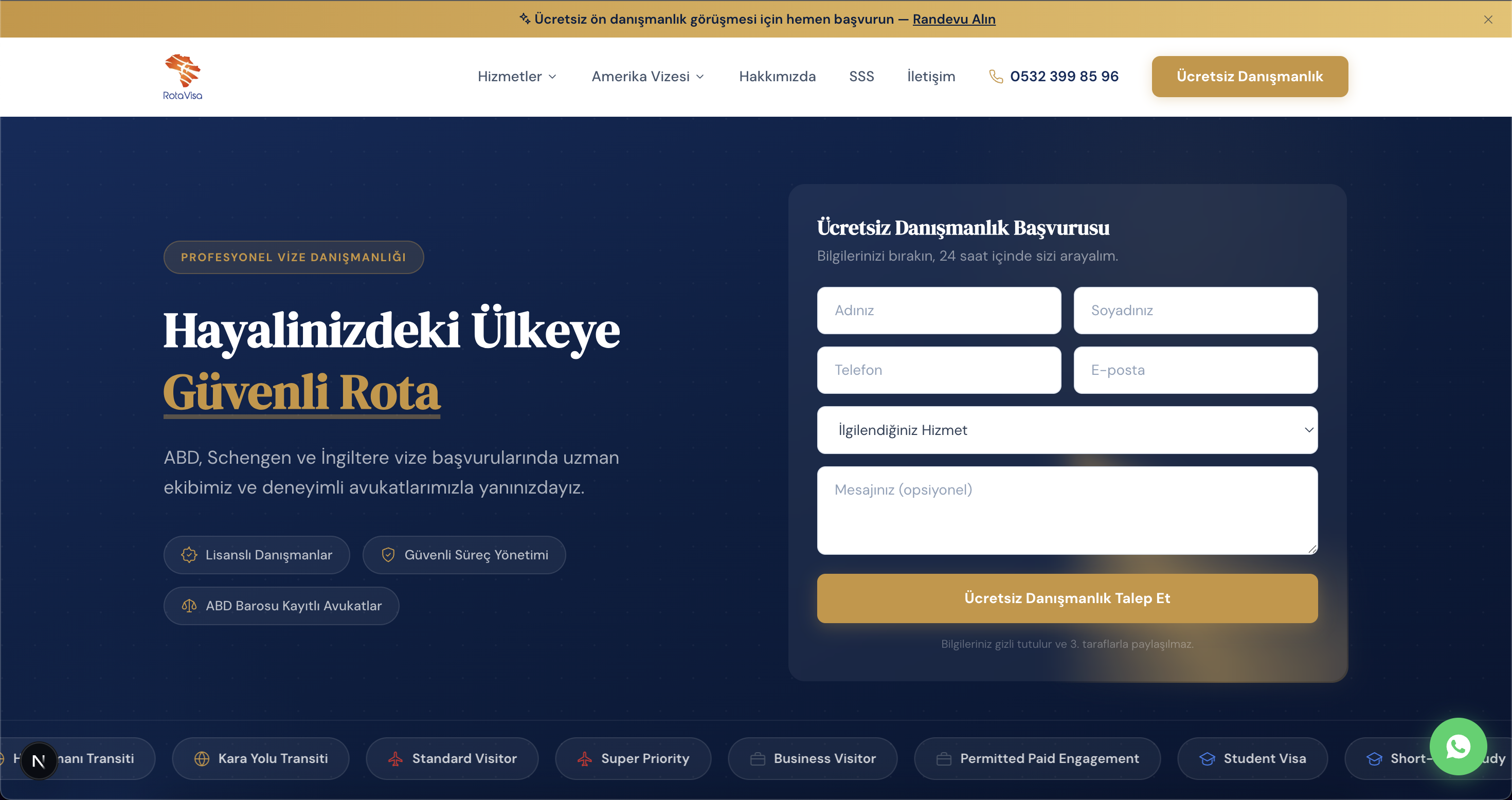
Growth can come faster than expected once the process is in place. Visarunway went from zero to 2,000 applications a month and cut repetitive enquiries by roughly 60%, and RotaVisa runs applications across more than 40 countries; both are specialist visa businesses, but the lesson for a travel agency is the same — the process has to be ready before the volume arrives. Their stories are in the Visarunway case study and the RotaVisa case study.
If you are still deciding between a travel agency and a pure visa consultancy, compare this plan with how to start a visa consulting business. The legal set-up, customers and margins differ, and the right choice depends on which customers you already know.
It depends on where you are based and where you sell. Some US states, such as California and Florida, require seller-of-travel registration. The UK requires an ATOL for selling flight-inclusive packages to UK consumers. Turkey requires a Ministry of Culture and Tourism operating licence and TÜRSAB membership. Check the official regulator in every place you are established or sell into before you trade.
No. IATA accreditation is a commercial accreditation that lets an agency sell airline tickets and settle through IATA's Billing and Settlement Plan. It is not a government licence to trade. Many new agencies sell flights through a host agency or consolidator first. Agencies located in the United States use IATA's IATAN programme instead of standard IATA accreditation.
A host agency is an established, accredited travel agency that lets independent agents sell under its supplier contracts and accreditation in exchange for a share of the commission. It shortens the time to first sale and lowers upfront cost, but you give up part of your margin and some control over brand and data. Check whether the host allows visa services.
In many places a travel agency can offer administrative help: checking documents against published lists, booking appointments and submitting applications. Giving immigration advice for a fee, such as assessing eligibility or recommending a route, is restricted to authorised people in several countries, including the UK, Australia and Canada. Define your scope in writing and refer advice cases to a qualified partner.
Show the government or centre fee and your service fee as separate amounts on every quote and invoice. The service fee should cover the staff time a case actually takes, including document checks, appointment booking and client updates. Government fees are generally non-refundable once an application is lodged, so state your refund policy in writing before the first sale.
Rules, fees and processes change. We checked this article against the official sources below on 16 September 2026 — confirm anything time-sensitive with the source before you rely on it.
The patterns in this article are already deployed across these platforms. Different brands, different visa types — one engine underneath.
Practical guides that go deeper on running a modern visa business.